Benefits of Continuous Delivery (CD)
2/28/20252 min read
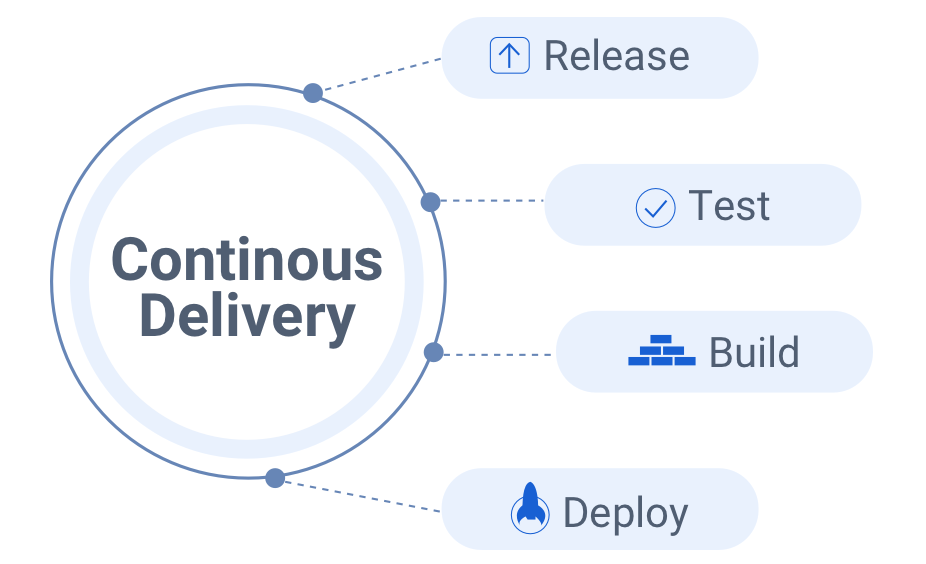
In our previous post, we explored Continuous Integration (CI) and how it helps teams merge, build, and test code changes efficiently. But what happens after the code is integrated? This is where Continuous Delivery (CD) comes into play.
The benefits of Continuous Delivery extend beyond integration, ensuring that software is always in a deployable state. With CD, teams can automate release processes, minimize manual interventions, and accelerate software delivery. Let’s dive into what Continuous Delivery is and why it matters in DevOps.
What is Continuous Delivery (CD)?
Continuous Delivery (CD) is a DevOps practice that ensures software can be released to production at any time with minimal effort. It extends Continuous Integration by automating the testing, deployment, and release processes, ensuring that new features and bug fixes reach users faster and more reliably.
While Continuous Deployment (a related concept) automates releases directly into production, Continuous Delivery gives teams the control to release software when they choose, making it a balance between automation and governance.
Key Benefits of Continuous Delivery
The benefits of Continuous Delivery go beyond automation—it transforms how teams build, test and deploy applications, improving overall efficiency.
🚀 Faster and More Reliable Releases
Automated pipelines remove manual bottlenecks, allowing teams to deploy frequently and with confidence.
Faster feedback loops ensure that defects are caught before they reach production.
🔄 Improved Software Quality
Automated testing verifies that every change meets quality and security standards before deployment.
Teams can deliver stable, well-tested applications with fewer post-release issues.
💡 Reduced Deployment Risks
Small, incremental updates are easier to test and rollback compared to large, complex deployments.
CD ensures that every release is low-risk and highly controlled.
🔧 Increased Developer Productivity
Developers focus on writing code rather than manual deployment tasks.
Automated pipelines allow teams to experiment and innovate without fear of breaking production.
🌍 Better Collaboration Across Teams
CD fosters a culture of shared responsibility among developers, testers, and operations teams.
Transparency across the pipeline ensures everyone is aligned on release cycles and readiness.
How to Implement Continuous Delivery
Getting started with Continuous Delivery requires a well-structured pipeline and automation strategy. Here’s how:
Extend Continuous Integration (CI) with Automated Deployment Pipelines 📦
Use tools like Jenkins, GitHub Actions, GitLab CI/CD, or AWS CodePipeline to automate builds and deployments.
Automate Testing at Every Stage ✅
Implement unit tests, integration tests, security scans, and performance testing to ensure release readiness.
Use Infrastructure as Code (IaC) 🏗️
Tools like Terraform, Ansible, or AWS CloudFormation help automate and standardize environments.
Adopt Feature Flags for Safer Releases 🚀
Feature toggles allow teams to deploy code without enabling it for all users immediately.
Monitor and Gather Feedback Continuously 📊
Use observability tools like Prometheus, Datadog, or AWS CloudWatch to track system performance.
📌 Example: A GitHub Actions workflow automating the deployment process of static front end code.
📌 Example: A CloudFormation template provisioning AWS CodePipeline and AWS CodeBuild that takes its sources from Github.
Conclusion
The benefits of Continuous Delivery make it a crucial practice for DevOps teams aiming for faster, safer, and more efficient software releases. By automating deployments, improving collaboration, and reducing risks, CD empowers organizations to innovate with confidence.
📢 Up next: Stay tuned for how to automate infrastructure with Infrastructure as Code (IaC) !